
As global plastics production remains above 400 million tonnes annually, cleaning efficiency has become a measurable production concern. Plastics Europe reported approximately 414 million tonnes of plastics produced worldwide in 2023. That scale increases pressure on processors to reduce residue, color carryover, waste, and unplanned downtime.
The masterbatch market is also expanding. Grand View Research estimates continued growth through 2030, supported by rising demand for colored, additive, and performance-enhanced plastics. However, larger production volumes make poor cleaning practices more expensive. A small black streak inside a transparent film line can trigger rejected rolls, customer complaints, and hours of troubleshooting.
This guide examines seven Masterbatch Reinigung solutions for global buyers. It compares purging compounds, mechanical cleaning, screw removal, thermal methods, and automated procedures. The evaluation focuses on cleaning performance, material compatibility, operator safety, documentation, and total operating cost. Manufacturer data sheets, SDS documents, processing temperatures, and trial results should support every purchasing decision.
One method rarely fits every machine.
A solution that works on a polypropylene line may perform poorly with engineering polymers or sensitive additives. Experienced processors know this, although supplier claims can still sound overly simple. Buyers should question impressive results without test conditions, resin details, or measurable waste data. The best choice is not always the fastest method. It should protect equipment, shorten changeovers, and produce repeatable results across different plants. Reports from Plastics Europe, Grand View Research, and MarketsandMarkets provide useful market context, but real factory trials remain essential. A neat ranking can still mislead without production evidence.
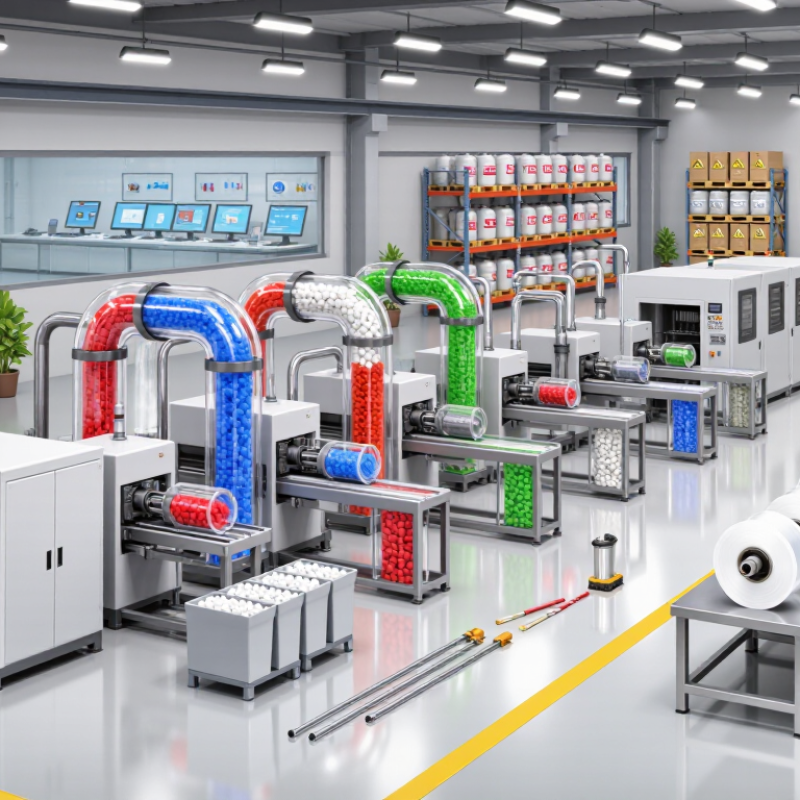
Masterbatch cleaning is often performed between 180°C and 300°C, depending on the polymer, pigment carrier, and extrusion equipment. The purpose is practical: remove color residue, reduce contamination, and prepare the line for a lighter shade or natural material. Temperature alone does not guarantee a clean barrel. A stable melt flow matters more.
At lower temperatures, residue may remain in dead zones, screw flights, or the die. At excessive temperatures, the compound can degrade, produce fumes, or leave darker deposits. Pressure may also rise suddenly when a hardened plug breaks free. Operators should confirm the machine’s temperature limits, wear suitable heat-resistant protection, and keep ventilation active. Do not guess.
A controlled process usually begins with stopping the previous feed and allowing the barrel to reach the selected cleaning temperature. Feed the cleaning material slowly, then purge at low screw speed. Watch melt color, pressure, and discharge consistency. If pressure climbs, stop feeding and investigate instead of forcing the screw. This step is sometimes rushed. That is a mistake.
For global buyers, useful cleaning solutions include compatible purge compounds, natural resin purges, mechanical barrel cleaning, screw inspection, die wiping, low-residue formulations, and scheduled color-change procedures. The best choice depends on polymer type, processing history, and equipment design. A cleaning method that works at 220°C may fail at 280°C. Trial records, temperature logs, and measured purge waste provide more reliable evidence than appearance alone.
Choosing a masterbatch cleaning solution requires more than checking the purchase price. In production trials, dosage often controls the real cost. A natural resin purge usually needs 2–4 kg, leaves low residue, and costs about $2–4/kg. An abrasive purge may need only 1–2 kg, but it can leave visible particles in narrow channels. Its cost often reaches $5–8/kg. A chemical purge works effectively at 0.5–1.5 kg, with costs near $8–14/kg. However, operators must follow temperature and ventilation instructions carefully.
A low-viscosity carrier normally uses 3–6 kg and costs $1.50–3/kg. It flows well through simple screw designs but may struggle with burnt pigment. A high-viscosity purge needs 1–3 kg, costs around $4–7/kg, and often removes stubborn color from mixing sections. Residue can increase if the barrel temperature is too low.
A regrind-compatible solution may cost $2–5/kg and reduce waste, though its cleaning strength is moderate. It suits frequent color changes better than severe contamination.
For temperature-sensitive polymers, a low-temperature purge is safer. Expect 2–4 kg and roughly $6–10/kg. Residue is usually limited when the next material is loaded slowly. These figures are working ranges, not fixed guarantees. Machine size, screw geometry, and pigment loading change the result. I would record dosage, purge weight, screen condition, and transition time during every trial. The cheapest kilogram can become expensive after a failed restart.
7 Best Masterbatch Reinigung Solutions for Global Buyers
Choosing purge chemistry depends on polymer behavior, not only cleaning speed. PlasticsEurope reported global plastics production at 413.8 million tonnes in 2023, showing why repeatable cleaning matters across international plants. PE and PP usually respond well to carrier-based purges with controlled shear. Their low polarity helps remove many color concentrates without aggressive chemistry.
PET needs more caution. Moisture and excessive residence time can accelerate hydrolysis, reducing intrinsic viscosity. The PET Resin Association and processing guidance commonly emphasize drying discipline before molding, especially when recycled content is present. Use a purge compatible with PET temperatures, then verify melt quality through pressure, color, and viscosity checks. Fast is not always safe.
Engineering polymers require a narrower thermal window. PA, POM, PC, and high-temperature blends may need specialized chemical purges rather than simple resin displacement. Review the product’s technical data sheet, safety data sheet, recommended temperature, and exposure time. Clear the screw, barrel, hot runner, and dead zones separately. Small black specks often hide there.
A practical ranking should include PE, PP, PET, and engineering-polymer performance separately. One universal “best” solution is unlikely. I would question any comparison without trial data from the actual machine, pigment load, and processing temperature. The 2024 PlasticsEurope report also highlights rising recycled-plastic use, which can increase contamination variability. Document purge weight, downtime, scrap rate, and the first acceptable shot. That evidence is more useful than impressive laboratory claims.
| No. | Purge Solution | Best-Suited Polymers | Typical Processing Temperature | Typical Starting Dosage | Primary Cleaning Mechanism | Main Advantages | Key Limitations | Recommended Use Case |
|---|---|---|---|---|---|---|---|---|
| 1 | Non-Abrasive Polyolefin Purge | PE, PP, TPO, and other standard polyolefins | 180–240 °C | 2–5 barrel capacities, followed by a short polymer rinse | High-viscosity displacement and controlled melt encapsulation | Low risk of screw and barrel damage; suitable for routine color changes | Less effective on severely carbonized deposits or long-term thermal degradation | Frequent masterbatch changes on single-screw extrusion and injection equipment |
| 2 | Mineral-Filled Abrasive Purge | PE, PP, filled polyolefins, and heavily pigmented compounds | 190–250 °C | 1–3 barrel capacities, normally at reduced screw speed | Mild mechanical scrubbing combined with melt displacement | Improves removal of stubborn color, filler, and additive residues | Not preferred for delicate or highly polished flow surfaces; avoid excessive residence time | Dark-to-light color transitions and machines processing high-loading concentrates |
| 3 | Reactive Chemical Purge | PE, PP, ABS, and selected styrenic or polar residues | 190–280 °C | 1–2 barrel capacities, then a compatible resin flush | Chemical softening or breakup of adhered polymer and additive films | Useful where standard resin purging cannot remove persistent contamination | Requires strict temperature control, ventilation, and material compatibility checks | Unplanned color contamination, degraded polymer films, and difficult shutdown cleaning |
| 4 | PET-Compatible High-Temperature Purge | PET, recycled PET, and polyester-based compounds | 260–300 °C | 1–3 barrel capacities at the machine’s normal PET temperature | High-temperature displacement with controlled viscosity and thermal stability | Designed to reduce black specks, color carryover, and polyester residue | Must be kept dry; moisture control remains essential for PET processing | PET extrusion, sheet, film, strapping, and preform production changeovers |
| 5 | Glass-Fiber and Mineral Residue Purge | PA, PBT, PET, PPS, and other reinforced engineering polymers | 250–330 °C | 1–2 barrel capacities, using controlled screw speed and back pressure | High-viscosity flushing with limited mechanical cleaning of filler-related deposits | Supports changeovers involving reinforced grades and high additive loading | Abrasive grades require suitable screw, barrel, and tooling materials | Engineering-compound production with glass fiber, mineral filler, or flame-retardant additives |
| 6 | Low-Residue Food-Contact-Oriented Purge | PE, PP, PET, and polymers used in regulated packaging applications | 180–300 °C, depending on the base polymer | 2–4 barrel capacities, followed by a validated production-resin flush | Controlled displacement with emphasis on low carryover and easy evacuation | Helps reduce residual purge material before certified packaging production | Food-contact suitability must be confirmed for the exact formulation and market | Packaging lines where contamination control and documented changeover procedures are critical |
| 7 | High-Temperature Engineering-Polymer Purge | PC, POM, PA, PPS, PEI, and other high-temperature polymers | 280–360 °C, subject to polymer and equipment limits | 1–2 barrel capacities with short residence time | Thermally stable melt displacement and removal of high-temperature residue | Suitable for demanding engineering resins and high-temperature changeovers | Temperature window, residence time, and purge-to-resin compatibility must be carefully controlled | Technical injection molding and extrusion lines processing high-performance polymers |
| Technical note: Temperature ranges and starting dosages are typical industry operating ranges, not universal specifications. Actual results depend on machine size, screw design, residence time, polymer moisture, contamination severity, tooling geometry, and the purge formulation. Always follow the supplier’s safety data, processing instructions, ventilation requirements, and applicable regulatory rules. | ||||||||
Global buyers need more than a visually clean extruder. They need measurable validation. PlasticsEurope reported global plastics production at 400.3 million tonnes in 2022. This scale increases pressure on processors to reduce color carryover, waste, and unplanned downtime. Masterbatch cleaning compounds can support this process, but their performance should be verified under controlled conditions.
MFR testing under ISO 1133 provides a practical checkpoint after cleaning. Operators should record the melt flow rate before cleaning, during purging, and after the next production run. A stable result suggests reduced residue and consistent thermal behavior. A sudden increase may indicate degraded polymer or excessive shear. A decrease may signal remaining contamination. Small changes matter.
Color validation requires more than human inspection. The CIE 142-2001 technical report supports the use of the CIEDE2000 formula for color-difference evaluation. Buyers can measure ΔE00 between a reference plaque and post-cleaning samples. Lower values usually indicate better color recovery, but acceptance limits must match the application. A reading below 1 may appear excellent, yet surface gloss can still distort judgment. That is a weakness in many shop-floor checks.
Reliable trials should use the same barrel temperature, screw speed, residence time, and test specimen thickness. Keep the records. Do not trust one test result. Temperature drift and sampling errors can quietly mislead even experienced teams.
7 Best Masterbatch Reinigung Solutions for Global Buyers
Global buyers should judge masterbatch cleaning solutions by compliance evidence, not only cleaning speed. An SDS must identify hazards, composition ranges, transport details, and safe handling controls. REACH checks are equally important. Registration does not automatically mean every use is legal. The European Chemicals Agency’s 2023 enforcement report found non-compliance in 23% of 2,407 inspected products. That figure deserves attention.
RoHS verification should cover restricted substances within each homogeneous material. Ask for current test reports, laboratory methods, detection limits, and sample dates. A supplier’s declaration may help, but it is not the same as independent testing. For food-contact applications, FDA 21 CFR 177 references specific polymer and additive conditions. It does not create blanket approval for every cleaner or residue. Processing temperature matters. So does the final migration risk.
Tips: Request the SDS before ordering samples. Match the document language to your operating country. Check the product identifier across the SDS, technical data sheet, invoice, and packaging. Keep batch records and cleaning validation photos. Simple records help.
In practice, residue can hide inside dead zones, screw flights, or hot runners. A cleaner that works at 230°C may damage a sensitive polymer system. This is often overlooked. Buyers should confirm compatibility with equipment seals and production polymers. The PlasticsEurope 2023 market report shows Europe still processed tens of millions of tonnes of plastics, reminding us that small compliance gaps can affect large supply chains. The paperwork is not perfect, but disciplined review reduces avoidable risk.
The suitable temperature depends on the polymer, pigment carrier, and extrusion equipment. Lower temperatures may leave residue in screw flights or die channels. Excessive heat can cause degradation, fumes, or darker deposits. Temperature alone is not enough.
No. Higher heat may soften residue but also damage the polymer. A stable melt flow is more important than maximum temperature. A method working at 220°C may fail at 280°C. Do not guess.
Stop the previous feed and reach the selected barrel temperature. Feed the cleaning material slowly. Use low screw speed during purging. Monitor melt color, pressure, and discharge consistency.
Stop feeding immediately and investigate the restriction. Do not force the screw through a hardened plug. Check dead zones, screw flights, screens, and the die. Pressure changes can happen quickly.
Carrier-based purges with controlled shear often work well for PE and PP. These polymers usually respond to moderate cleaning action. A low-viscosity material may flow through simple screw designs. Burnt pigment can still resist removal.
PET needs careful drying and controlled residence time. Moisture can accelerate hydrolysis and reduce melt quality. Use a temperature-compatible purge. Check pressure, color, and viscosity before restarting production.
PA, POM, PC, and high-temperature blends often need specialized purge chemistry. Use the recommended temperature and exposure time. Clean the screw, barrel, hot runner, and dead zones separately. Small black specks can hide there.
A natural resin purge may require about 2–4 kilograms. An abrasive purge may use 1–2 kilograms. A chemical purge may need only 0.5–1.5 kilograms. These are working ranges, not promises.
Compare dosage, price per kilogram, purge waste, downtime, and restart scrap. A low purchase price may hide a failed restart. Record purge weight, screen condition, and transition time. Appearance alone is weak evidence.
Confirm the machine’s temperature limits before feeding any cleaning material. Wear suitable heat-resistant protection. Keep ventilation active, especially with chemical products. I would not rely on memory.
Masterbatch Reinigung is an essential part of polymer processing at temperatures between 180 and 300°C, helping remove color, additives, and degraded material from equipment before a material change or shutdown. This article compares seven cleaning solutions by purge dosage, residue generation, cleaning efficiency, and cost per kilogram. It explains how different purge chemistries may suit PE, PP, PET, and engineering polymers, while highlighting key risks such as thermal degradation, contamination, and excessive material waste.
For reliable validation, processors can combine visual inspection with melt flow rate testing under ISO 1133 and color difference measurement using ΔE00. Global buyers should also review technical data, safety documentation, and regulatory declarations before purchase, including SDS, REACH, RoHS, and FDA 21 CFR 177 compatibility where applicable. The goal is to select a practical, consistent, and compliant cleaning method that supports stable production and reduces downtime.
