
Choosing the right Plastic Dryer Machine can determine whether production runs smoothly or quietly loses money. Moisture-sensitive materials, such as PET, nylon, and polycarbonate, may leave the hopper looking dry while still producing bubbles, splay, brittleness, or weak parts. The problem often appears later, during molding or quality inspection.
John Bozzelli, a respected injection molding consultant and founder of Injection Molding Solutions, has stated, “Moisture is often the hidden cause of molding problems.” This principle remains practical on a busy factory floor. A suitable dryer should match the resin, batch size, hourly throughput, and required dew point. For example, a PET line may need stable desiccant air below -40°C dew point, while a small nylon operation may need different airflow and residence-time settings. Temperature control matters. Excessive heat can damage resin before it reaches the barrel.
Look beyond the advertised capacity. Check actual drying performance, energy consumption, regeneration design, filter access, alarm functions, and control accuracy. A machine that claims 100 kilograms per hour may perform differently with wet regrind or frequent material changes. That detail is easy to miss. Maintenance experience also matters. Operators should be able to inspect desiccant beds, clean filters, and verify sensors without lengthy downtime.
No selection is perfect. A spreadsheet may overlook operator habits, humidity changes, or limited floor space. Therefore, compare measured drying results with supplier data, test your actual resin, and document the results. This guide explains those decisions clearly, so buyers can choose a reliable Plastic Dryer Machine rather than simply the cheapest one.
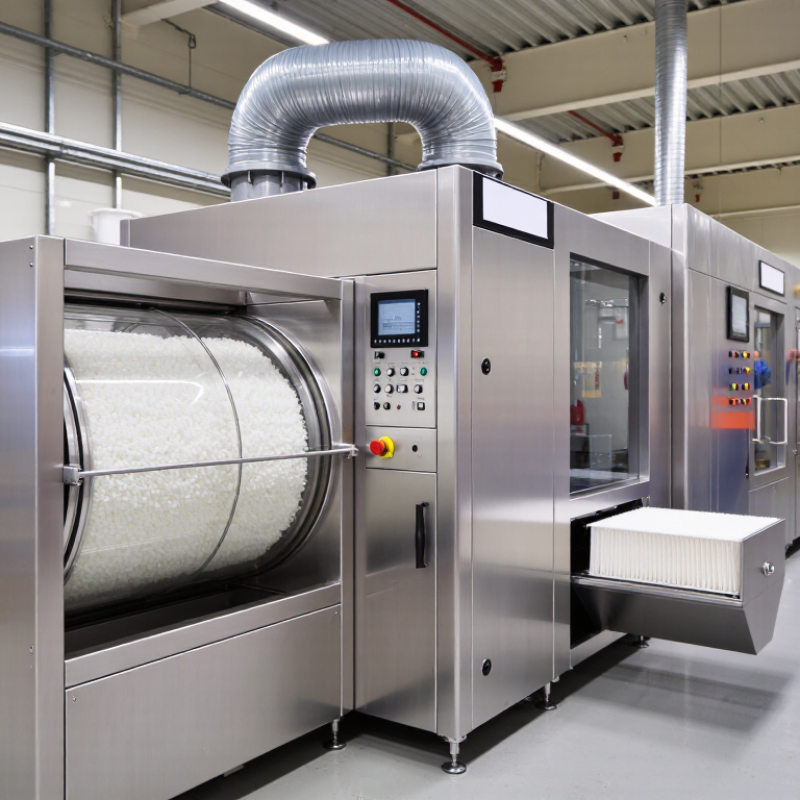
Plastic dryer machines remove moisture before melting, molding, or extrusion. This step protects appearance and process stability. PlasticsEurope reported 413.8 million tonnes of global plastic production in 2023. Even small drying errors can therefore affect large production volumes. (PlasticsEurope, Plastics—The Fast Facts 2024)
The best machine depends on the resin, pellet size, throughput, and moisture target. Hygroscopic materials, such as nylon, PET, and polycarbonate, usually require desiccant drying. A stable dew point below -40°C is common for demanding applications. Non-hygroscopic materials may need only warm-air drying, especially after humid storage. Check the actual resin data sheet, not a sales claim.
In practice, wet pellets may crackle inside the hopper. Molded parts can show bubbles, silver streaks, or weak weld lines. These signs often reveal poor airflow or insufficient residence time. Measure inlet and outlet dew points, air temperature, and final moisture content. Energy use also matters. The International Energy Agency identifies industrial efficiency as a major route for reducing energy demand, but dryer savings are easy to overestimate. A smaller unit may consume less energy, yet fail during peak loading. I would test the machine with real production resin, because laboratory results can look cleaner than factory reality. Check controls, insulation, filter access, and calibration support before purchase.
Choosing a plastic dryer starts with the material, not the machine cabinet. Check the resin’s moisture sensitivity, pellet size, throughput, and processing temperature. Hygroscopic materials, such as polyamide, PET, and TPU, absorb moisture from surrounding air. They usually need desiccant drying with a controlled dew point. Not every resin needs this level of treatment. For some non-hygroscopic materials, a hot-air dryer may provide adequate surface drying.
Use the supplier’s drying data as a starting point, then verify it on your own line. Measure moisture before and after drying. A moisture analyzer can reveal problems that dry-looking pellets hide. Watch the hopper temperature, residence time, airflow, and dew point during trials.
If pellets remain wet inside, raising temperature alone may damage the polymer. Costly shortcut. For heat-sensitive materials, vacuum or low-temperature systems may reduce oxidation and discoloration.
Match dryer capacity to actual hourly output, not the maximum number in a brochure. An oversized hopper can increase residence time and waste energy. An undersized unit can create wet spots, unstable viscosity, and rejected parts. Keep records for each resin and color change.
Small details matter. One point deserves reflection: a dryer can be correctly selected yet poorly operated. Open doors, blocked filters, and incorrect loading quickly weaken performance. Operators should inspect alarms, clean filters, and confirm settings at every shift.
Drying is a process, not a box.
Choosing a plastic dryer machine starts with capacity, but capacity alone can mislead. Match the dryer to your hourly resin consumption, not the hopper’s maximum volume. A unit rated for 100 kilograms per hour may underperform with wet, hygroscopic materials. Leave roughly 15% headroom for demand changes and filter loading. Oversizing also increases idle heating and air movement.
Drying performance depends on dew point, residence time, airflow, and material type. For engineering plastics, a stable dew point near -40°C is often specified. Verify this value under real production conditions, not only in laboratory tests. Measure moisture before and after drying with a calibrated analyzer.
The PlasticsEurope Plastics—The Facts 2023 report recorded 400.3 million tonnes of global plastic production in 2022. That scale makes moisture control increasingly important for reducing rejects and reprocessing. Still, published performance figures can vary sharply between materials and climates.
Energy efficiency deserves equal attention. The IEA’s Energy Efficiency 2023 report states that industry uses about 37% of global final energy. Select models with insulated hoppers, heat recovery, variable-speed blowers, and automatic regeneration control. Compare energy consumption in kWh per kilogram of dried material, rather than comparing motor wattage alone.
Tips: Request a factory test using your resin, target throughput, and starting moisture. Check dew point recovery after door opening. Record energy data for one full shift. I would not trust a low-energy claim without these measurements. Worker loading habits may also distort the results.
A good plastic dryer machine should make process control visible and understandable. Look for independent temperature zones, clear sensor readings, and adjustable drying time. A reliable controller should display hopper temperature, dew point, and alarm history without forcing operators through confusing menus. Data logging can reveal moisture problems before molded parts show bubbles, streaks, or brittleness.
Controls need practical testing. Ask whether operators can change settings without bypassing safeguards. Check the response to a failed sensor, blocked airflow, or excessive temperature. An alarm that appears briefly is not enough; it should remain visible until the cause is addressed. Touchscreens may look modern, but physical emergency controls remain useful when gloves, dust, or stress affect operation.
Maintenance demands equal attention. Inspect filters, hoses, seals, and desiccant condition at scheduled intervals. A clogged return filter can reduce airflow and increase energy use. Quick-access panels save time, but exposed hot surfaces create another risk. Lockout procedures, heat-resistant gloves, electrical grounding, and guarded moving parts should be part of daily work, not paperwork alone. Safety interlocks must stop operation when a door opens or airflow fails. Test them regularly.
In practical evaluations, small details often decide reliability. A drain that is hard to reach may be ignored. That is an imperfect assumption, but real maintenance behavior matters. Choose equipment with readable manuals, available service guidance, and replacement parts that can be identified accurately. Train operators with actual fault scenarios, not only normal start-up steps.
How to Choose the Best Plastic Dryer Machine?
Selecting a dryer begins with your production requirements, not a machine catalogue. Define the plastic type, hourly output, moisture target, and drying temperature. A resin requiring 0.02% moisture needs stricter control than general-purpose material. Measure your actual throughput, including peak demand, rather than relying on average figures. Undersizing creates wet pellets and unstable molding. Oversizing wastes energy and floor space.
Check the hopper capacity against your feeding schedule. A 50-kilogram hopper may suit one line but interrupt another. Review airflow, heater accuracy, insulation, and filter access. Ask for documented performance data under conditions similar to yours. Request a trial with your own material when possible. This exposes practical problems, such as uneven drying or difficult cleaning. Controls should show temperature, drying time, alarms, and energy use clearly. Simple interfaces are often safer for busy operators.
Tips: Record moisture before and after drying. Compare readings at several hopper levels. Inspect the machine after a full shift, not only during a demonstration. Check noise, cabinet heat, and maintenance access. Leave room for future output, but avoid paying for unused capacity. A careful decision may still need revision after installation. Real production is less tidy than a datasheet.
Select a dryer whose temperature range and control accuracy match the resin being processed. The chart shows representative midpoint drying temperatures commonly used for major engineering and commodity plastics.
Higher-temperature materials such as PET and PC generally require a dryer with stable heating, effective insulation, and precise temperature control. Always verify the final settings against the resin supplier’s technical data sheet.
Start with resin type, moisture sensitivity, pellet size, output, and processing temperature. Hygroscopic materials usually need desiccant drying. Some non-hygroscopic materials may only need hot-air drying.
Polyamide, PET, and TPU can absorb moisture during storage and handling. These materials often require controlled dew point drying. Dry-looking pellets may still contain internal moisture.
Use it as a starting point, not a final answer. Measure moisture before and after drying on your own production line. Conditions can differ greatly between facilities.
Check hopper temperature, residence time, airflow, dew point, and moisture readings. Compare samples from different hopper levels. Small details matter.
Not always. Excessive heat may damage the polymer, especially when pellets remain wet inside. Lower-temperature or vacuum drying may reduce oxidation and discoloration.
Match capacity to actual hourly output, including peak demand. An undersized dryer may cause wet spots and unstable viscosity. An oversized hopper can waste energy and extend residence time.
Clear controls should display temperature, drying time, alarms, and energy use. Operators should inspect filters, settings, and alarms every shift. Keep access simple.
Inspect the dryer after a full shift, not only during a demonstration. Check noise, cabinet heat, filter condition, and maintenance access. The original choice may still need revision.
Choosing the right Plastic Dryer Machine is essential for achieving consistent material quality, stable production, and efficient operation. The selection process should begin with understanding how drying affects plastic processing, including moisture removal, product consistency, and prevention of defects. Different materials may require different dryer types, temperatures, airflow patterns, and drying methods, so compatibility with the intended plastic is a primary consideration.
It is also important to compare drying capacity, performance, energy consumption, and recovery time to ensure the machine matches production demands without unnecessary operating costs. User-friendly controls, accurate temperature monitoring, simple cleaning, accessible maintenance points, and reliable safety features can improve daily efficiency and reduce downtime. Ultimately, the best Plastic Dryer Machine should fit the required production volume, available workspace, material characteristics, operating budget, and long-term maintenance plan while providing dependable and consistent drying results.
