
Sourcing recycled plastic for global buyers requires more than finding a low price. It requires evidence, consistency, and careful supplier verification. In Recikliranje Plastike, a promising offer may still hide moisture, mixed polymers, weak documentation, or unstable quality. The real work begins before the purchase order.
Inger Andersen, Executive Director of the United Nations Environment Programme, stated, “We cannot recycle our way out of the plastic pollution crisis.” Her warning matters to buyers selecting post-consumer recycled material. Recycling must support responsible production, not create another source of waste. This guide examines practical sourcing decisions, from identifying reliable processors to checking material specifications and shipment records.
A buyer should request clear details about polymer type, origin, contamination limits, moisture content, color, odor, melt flow, and recycled percentage. A sample should match the declared grade. A laboratory report should support that claim. Factory photographs help, but they are not enough. An independent audit may reveal weaknesses that marketing materials conceal.
Global purchasing also demands traceability. Buyers should review certificates, chain-of-custody records, export documents, and applicable environmental requirements. Supplier capacity matters, too. Can the processor deliver ten containers consistently, or only one attractive trial shipment?
Some assumptions fail.
Even experienced teams can overlook packaging changes, port delays, or batch variation. That uncertainty deserves honest planning. The strongest sourcing strategy combines technical testing, supplier conversations, documented inspections, and realistic risk controls. It does not promise perfect circularity. It builds a more dependable path toward recycled plastic procurement.
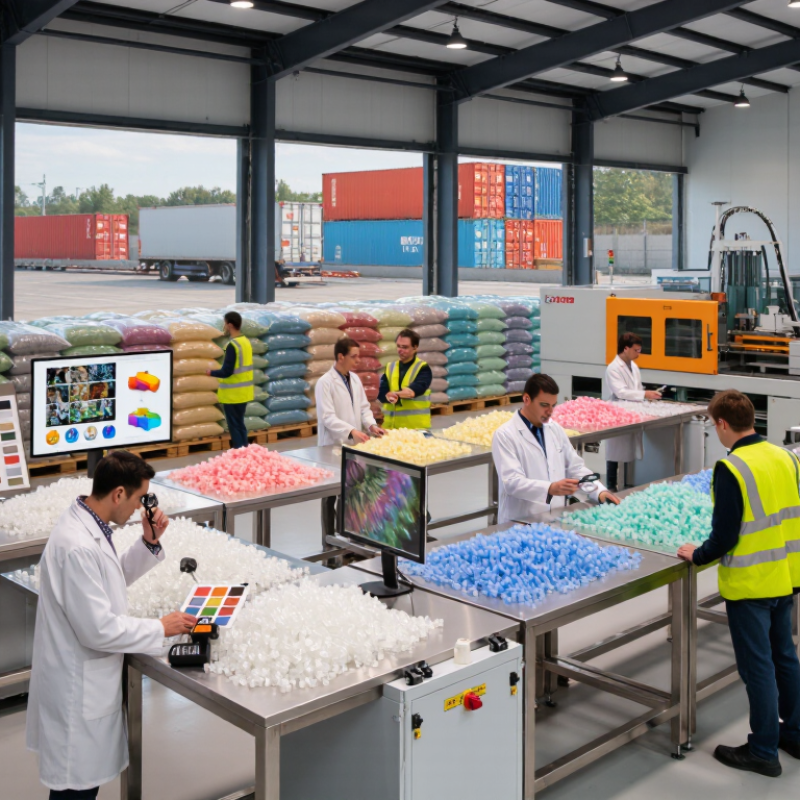
How to Source Recycled Plastic for Global Buyers?
Recycled plastic sourcing begins with a precise material definition. Common types include post-consumer recycled plastic and post-industrial recycled plastic. Post-consumer material comes from used packaging and household products. Post-industrial material comes from manufacturing scrap. The difference affects traceability, cleanliness, and buyer expectations.
Specify the polymer before requesting quotations. Typical options include recycled PET, HDPE, PP, and LDPE. Then define the grade through measurable details. State melt flow rate, moisture level, ash content, color, odor, pellet size, and contamination limits. A clear specification prevents unsuitable samples from entering production. End use matters equally. Food-contact packaging, textile fiber, injection molding, and construction products require different performance levels. Ask for test reports, production photos, sample approval, and batch records. A reliable supplier should explain testing methods, not only provide attractive figures. I have found that small differences in melt flow can affect filling speed, surface quality, and scrap rates.
Tips: Match the material to its final process. Request three recent batch samples. Check whether specifications remain stable after washing and extrusion. Confirm packaging weight, labeling, moisture protection, and shipping conditions. Do not treat “recycled” as a complete grade. It is only a starting point. Some sourcing decisions remain imperfect because waste streams naturally vary. Record every deviation and review it with the processor before scaling orders. In uncertain cases, a pilot run is safer than a large shipment. Test practically. Document honestly.
Recycled Plastic Types, Grades, and End-Use Requirements
Typical polymer density helps buyers evaluate sorting, washing, float-sink separation, and material identification requirements. Values shown are representative density references for commonly traded plastic families; recycled lots may vary because of additives, fillers, moisture, and contamination.
Reliable recycled plastic sourcing begins with evidence, not attractive quotations. OECD’s Global Plastics Outlook (2022) reports that only 9% of plastic waste was recycled globally between 1970 and 2019. This gap makes supplier verification essential. Ask for material origin, sorting records, processing flow, and recent batch data. A capable supplier should explain how contamination, moisture, and polymer mixing are controlled. Vague answers deserve caution.
Request certificates of analysis for several shipments, not one perfect sample. Check melt flow rate, density, moisture, ash, color, and polymer type through an independent laboratory. Compare results with the supplier’s specification sheet. Site audits should include bale storage, washing lines, pelletizing equipment, and production records. The Global Plastics Action Partnership has stressed the importance of traceability in circular material systems. Still, documents can be incomplete, and a site visit may show only a prepared area. Verification needs repetition.
Tips: Use a small trial order before signing a long contract. Record seal numbers and loading photos. Ask for mass-balance calculations. Confirm whether recycled content is post-consumer or post-industrial. Review non-conformance records, too. They reveal more than polished presentations. I would also leave room for doubt: recycled pellets can vary between lots, even when suppliers act responsibly. A written tolerance range protects both buyer and supplier.
Practical supplier-screening and material-verification framework for international buyers. Acceptance limits should be finalized according to the end-use, destination-market regulations, and product specifications.
| Evaluation Dimension | Material or Requirement | Reliable Data Point | Verification Evidence to Request | Buyer Acceptance Check | Priority |
|---|---|---|---|---|---|
| 1. Material Identification and Technical Fit | |||||
| Polymer type | Recycled PET | Typical density: approximately 1.34–1.39 g/cm³. Common forms include flakes, pellets, and food-contact-grade pellets. | Technical data sheet, polymer identification test, melt-flow data, moisture result, and recent batch certificate. | Confirm that the polymer type and form match the intended application, such as fiber, sheet, strapping, or bottle production. | Required |
| Polymer type | Recycled HDPE | Typical density: approximately 0.94–0.97 g/cm³. Usually supplied as natural, mixed-color, or color-sorted pellets and flakes. | Density result, infrared polymer identification, color data, contamination report, and processing history. | Check grade consistency, odor, color tolerance, and compatibility with the buyer's extrusion or injection process. | Required |
| Polymer type | Recycled PP | Typical density: approximately 0.90–0.91 g/cm³. Properties can vary substantially between homopolymer and copolymer grades. | Polymer identification, melt-flow-rate report, ash content, impact data where applicable, and source-material description. | Match the grade to the required stiffness, impact resistance, melt-flow range, and processing temperature. | Required |
| Polymer type | Recycled LDPE | Typical density: approximately 0.91–0.94 g/cm³. Film-derived material may have higher odor, moisture, and contamination variability. | Density, melt-flow rate, moisture, gel or black-speck count, and film-source information. | Set clear limits for contamination, gels, odor, and film thickness performance before approving a supplier. | Required |
| Material form | Flakes, regrind, or pellets | Pellets generally offer better feeding consistency; flakes and regrind may require additional drying, filtration, or compounding. | Particle-size range, bulk density, packaging specification, production-flow diagram, and photographs of the actual shipment. | Confirm that the form is compatible with the buyer's equipment and that packaging protects the material from moisture and foreign matter. | High |
| 2. Recycling Capability and Traceability | |||||
| Input-material control | Post-consumer or post-industrial feedstock | Post-consumer content originates from products discarded by households or commercial users; post-industrial content comes from manufacturing waste before consumer use. | Supplier declaration, incoming-material records, purchase documents, sorting records, and photographic evidence of storage areas. | Require the supplier to state the source percentage clearly and prohibit unsupported claims such as “100% recycled” without records. | Required |
| Process capability | Sorting, washing, separation, extrusion, and filtration | A capable facility should be able to explain each processing stage, the equipment used, and the control points for contamination and moisture. | Process-flow chart, equipment list, maintenance records, production capacity, utility records, and recent audit or site-visit report. | Check whether stated capacity is consistent with equipment size, operating hours, input purchases, and finished-goods output. | High |
| Mass-balance review | Input-to-output yield | Recycling yield varies by polymer and feedstock quality. Large unexplained differences between purchased input and shipped output require investigation. | At least three months of input purchases, production logs, scrap records, inventory reports, and sales or shipment records. | Reconcile material flows by month and by polymer type; investigate unexplained losses, double counting, or mixed-material reporting. | Required |
| Chain of custody | Identity-preserved, segregated, or controlled blending system | Identity-preserved systems keep materials separate; segregated systems maintain certified material separately; controlled blending tracks permitted mixing. | Chain-of-custody procedure, batch numbering system, warehouse segregation plan, transaction records, and independent audit evidence where available. | Confirm that the claimed recycled content follows the material from input receipt through production, storage, and shipment. | High |
| 3. Quality, Safety, and Compliance Verification | |||||
| Batch consistency | Melt flow rate, moisture, density, color, and contamination | These parameters are commonly used to compare recycled-plastic batches and identify process drift. | Batch-specific certificate of analysis, laboratory method, test date, sample identification, and retained-sample policy. | Approve only against buyer-defined specification ranges; do not rely solely on a generic technical data sheet. | Required |
| Contamination control | Non-polymer contamination, PVC, metals, paper, organic residue, and incompatible polymers | Contamination can reduce mechanical performance, cause processing defects, and create regulatory or safety concerns. | Sorting specifications, laboratory test results, metal-detection records, filtration details, and nonconformance reports. | Define numerical limits for each contaminant and require corrective-action records for failed batches. | Required |
| Food-contact suitability | Recycled plastic intended for food packaging | Food-contact approval is jurisdiction-specific and depends on the polymer, recycling process, input controls, and intended use. | Applicable regulatory authorization, process-control documentation, decontamination validation, migration testing, and declaration of compliance. | Do not accept a general “food grade” statement without documentation applicable to the destination market and intended food-contact conditions. | Required |
| Restricted substances | Chemical and heavy-metal compliance | Requirements vary by destination market and product application; recycled feedstock may require enhanced screening. | Recent third-party laboratory report, restricted-substance declaration, test method, sample details, and laboratory accreditation information. | Compare results with the legal limits and customer-specific limits applicable to the import country and end product. | Required |
| Environmental claims | Recycled-content percentage and sustainability statements | Claims should identify whether the percentage is calculated by mass, whether it is pre-consumer or post-consumer, and which product or batch it covers. | Calculation method, supplier declaration, purchase and production records, certificate scope, and independent verification where available. | Use the mass-based recycled-content percentage and ensure the claim is traceable to the supplied batch or product line. | High |
| 4. Commercial and Import Readiness | |||||
| Sample approval | Laboratory sample and production trial | A laboratory sample alone may not represent regular production; a production trial is needed to assess consistency and processability. | Sealed sample, sample test report, trial-production record, retained reference sample, and signed approval sheet. | Approve the supplier only after the sample passes both laboratory testing and a controlled production trial. | High |
| Inspection plan | Pre-shipment and arrival inspection | Inspection should cover quantity, packaging condition, lot numbers, moisture protection, appearance, and selected technical properties. | Inspection checklist, sampling plan, photographs, weight records, seal numbers, and nonconformance procedure. | Use lot-based sampling and retain samples from each shipment for dispute resolution and trend analysis. | Recommended |
| Packaging and logistics | Moisture-resistant bags, pallets, labels, and traceable lots | Recycled plastic should be protected from moisture, dust, odor transfer, and cross-contamination during storage and transport. | Packaging specification, label template, palletization plan, storage conditions, and shipping-document sample. | Require lot number, polymer type, net weight, production date, recycled-content claim, and handling instructions on each unit. | Medium |
| Contract safeguards | Specification, rejection, replacement, and audit clauses | Commercial terms should link payment and acceptance to documented quality and traceability requirements. | Signed technical agreement, approved specification, change-notification procedure, audit rights, and corrective-action timeline. | Include remedies for off-specification material, undocumented recycled content, late reporting, and unauthorized feedstock changes. | Required |
How to Source Recycled Plastic for Global Buyers?
Evaluate Material Quality Through Testing, Documentation, and Samples
Recycled plastic sourcing starts with evidence, not attractive photographs. Ask for the polymer type, recycled content, source, and processing method. I have learned that a clear material description prevents costly misunderstandings later.
Test the actual batch.
Request an independent laboratory report covering melt flow rate, moisture, ash content, contamination, tensile strength, and color consistency. The correct tests depend on the intended application. Film production may require different controls than injection molding. Check the test date, batch number, methods, and laboratory qualifications. A report without traceable details is weak evidence.
Documents should connect the material to its origin. Review collection records, sorting information, processing dates, safety data, and shipment documents. Confirm that recycled-content claims match the physical material. Requirements can differ across markets, so buyers should verify applicable regulations with qualified local advisers. Do not rely on a generic certificate alone.
Samples reveal practical problems.
Request sealed samples from the proposed production batch, not only showroom material. Inspect pellets for dust, dark specks, unusual odor, and uneven size. Run a small production trial when possible. Record drying conditions, machine settings, output appearance, and rejected pieces. I once trusted a good-looking sample that performed poorly after extended processing. That mistake changed my purchasing checklist.
Quality can vary.
Keep retain samples and compare future deliveries against approved limits. If results conflict, pause the order and repeat testing before scaling up. Reliable sourcing requires patience, traceability, and a willingness to question convenient answers.
Sourcing recycled plastic requires more than comparing a price per tonne. The OECD’s Global Plastics Outlook reports that the world generated 353 million tonnes of plastic waste in 2019, while only 9% was recycled. Supply is limited, and quality varies sharply. Ask for a recent specification sheet covering polymer type, recycled content, melt flow index, moisture, ash, and contamination. A low quote may hide unstable pellets or high sorting losses. Request batch samples before signing a yearly contract.
Certifications also affect pricing and buyer confidence. The Global Recycled Standard supports recycled-content and chain-of-custody claims, while ISO 14021 helps structure environmental declarations. Verify certificate scope, expiry date, site address, and material balance. Do not accept a logo alone. The OECD data suggests traceability matters because recycled supply remains a small share of total plastic use. Freight can erase a modest price advantage. Compare FOB, CFR, CIF, and DDP under Incoterms 2020, then calculate landed cost, insurance, port fees, duties, and inland delivery. UNCTAD transport reports repeatedly show how disruptions and fuel costs can move container expenses quickly.
Tips: Keep two quotations: product-only and delivered cost. Confirm container loading weight, pallet dimensions, moisture protection, and inspection responsibility. Use payment milestones tied to test results and shipping documents. Check twice. I still see buyers choosing the cheapest offer, then discovering that inconsistent color or melt flow creates production waste. That mistake is expensive, but avoidable.
A compliant recycled plastic sourcing plan starts with measurable material requirements. Define the polymer, color, melt flow rate, moisture limit, contamination tolerance, and packaging format. Request recent test reports, batch photos, and a clear chain-of-custody record. The OECD Global Plastics Outlook reported that only 9% of global plastic waste was recycled in 2019. That gap creates both risk and opportunity for serious buyers.
Build a qualified supplier list across at least two regions. Check input origin, sorting methods, processing controls, labor practices, and environmental permits. Use independent testing for polymer identity, heavy metals, odors, and recycled content claims. For food-contact or other regulated uses, confirm the applicable market requirements before purchase. Certification can support trust, but it does not replace site audits or batch-level evidence. We sometimes overvalue certificates. Practical verification still matters more.
Tips: Start with a small trial order. Inspect three consecutive batches before signing a long-term agreement. Write acceptance rules into the contract, including rejection rights and replacement timing. Review quarterly data on yield, contamination, delivery reliability, and carbon impacts. The Ellen MacArthur Foundation has emphasized the need for better circular material systems, yet recycled supply remains inconsistent. Keep a contingency supplier. Reconsider assumptions when quality changes.
Ask for material origin, sorting records, processing steps, and recent batch data. Request evidence, not attractive quotations. Vague answers require caution.
Test melt flow rate, density, moisture, ash, color, and polymer type. Use an independent laboratory for several shipments. One perfect sample proves little.
Inspect bale storage, washing lines, pelletizing equipment, and production records. Check contamination controls and moisture protection. A prepared area may not show normal operations.
Compare product price with the complete landed cost. Include freight, insurance, port fees, duties, and inland delivery. A cheap quote can create expensive production waste.
Check certificate scope, expiry date, site address, and material balance. Do not accept a logo alone. Certificates support trust, but they do not replace batch evidence.
Yes, begin with a small trial order. Inspect at least three consecutive batches when possible. Quality can change between lots. That risk is easy to underestimate.
Define polymer type, color, melt flow rate, moisture limit, contamination tolerance, and packaging format. Include rejection rights and replacement timing. Written tolerance ranges protect both sides.
Qualify suppliers from at least two regions. Keep a contingency supplier and review delivery reliability quarterly. Record seal numbers, loading photos, and shipping documents. Recheck assumptions when quality changes.
Sourcing recycled plastic for global buyers requires a clear, structured approach from material selection to long-term supply management. Buyers should first define the required polymer type, grade, color, form, performance characteristics, and end-use application. They should then identify reliable suppliers and verify their actual recycling capabilities, production consistency, traceability, and capacity. Material quality should be assessed through technical documentation, laboratory testing, and representative samples before any major purchase is made.
A successful sourcing plan also compares pricing, certifications, packaging, lead times, transportation options, and international trade terms. Buyers should confirm that suppliers can provide accurate compliance records and consistent documentation for each shipment. By combining careful qualification, quality control, transparent communication, and realistic logistics planning, companies can reduce supply risks and build dependable international partnerships. Recikliranje Plastike can support a more circular material strategy when sourcing decisions are based on verified quality, responsible processing, and clearly defined commercial requirements.
