
Why Choose a Plastic Waste Grinder for Recycling?

Time:2026-09-26 Author:Sophia
0%

Plastic waste is piling up in factories, warehouses, and recycling centers. A Plastic Waste Grinder offers a practical way to reduce bulky plastic into manageable flakes. These flakes are easier to store, transport, wash, and process.

In real production environments, plastic bottles, packaging offcuts, containers, and injection molding scraps often occupy valuable floor space. A properly selected grinder can reduce this volume and support a more organized recycling workflow. Its performance depends on blade design, motor power, screen size, feeding method, and material thickness. Operators should also consider noise control, dust collection, emergency stops, and easy access for maintenance.

It is not magic.

A grinder cannot remove every contaminant or replace careful sorting. Wet labels, metal pieces, and mixed polymers may reduce output quality. I have seen recycling plans fail when buyers focus only on capacity. A machine rated for high throughput may still perform poorly with tangled film or heavily contaminated waste. This is why technical specifications should match actual materials, working hours, and downstream equipment.

Reliable suppliers usually provide operating guidance, maintenance schedules, and safety documentation. They should explain realistic output instead of promising perfect results. Buyers can request sample testing before making a final decision. This simple step reveals feeding problems, noise levels, particle consistency, and cleaning requirements.

Choosing a Plastic Waste Grinder is therefore a process of matching equipment with real conditions. The right choice can reduce waste volume, improve material handling, and support more consistent recycling. The wrong choice creates downtime, unnecessary energy use, and avoidable repair costs. Careful evaluation matters.
Why Choose a Plastic Waste Grinder for Recycling?

What a Plastic Waste Grinder Is and How It Works

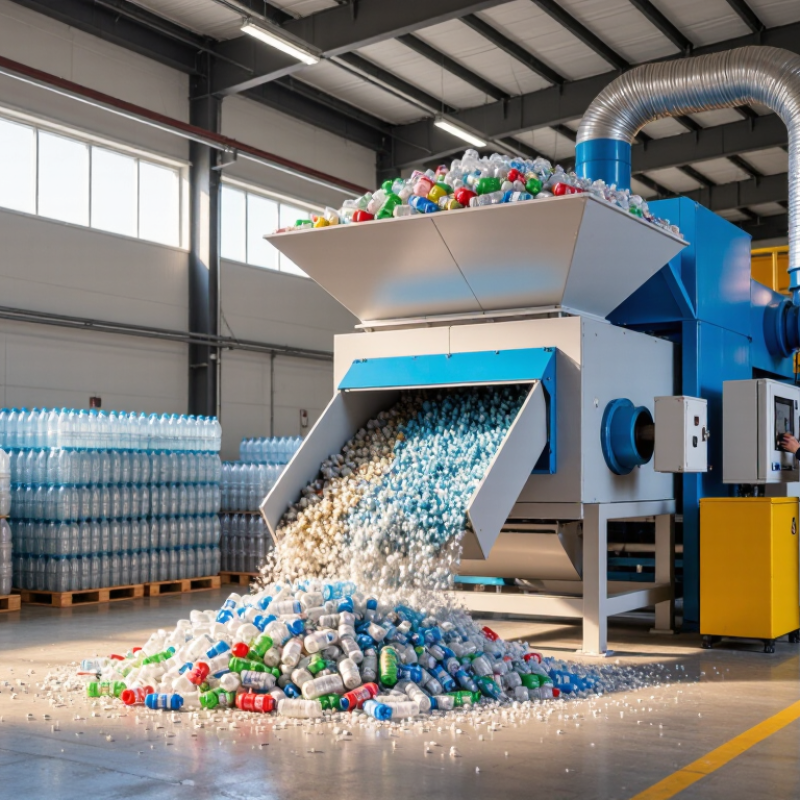
A plastic waste grinder is a size-reduction machine for discarded plastic parts, sheets, pipes, and production scrap. It uses a rotating rotor fitted with sharp knives and fixed counter-knives. Material enters the cutting chamber, where repeated shearing turns bulky waste into flakes. A screen controls the final particle size. Larger pieces remain inside until they are small enough to pass through.

The process is practical, but not magical. Operators should remove metal, stones, and excessive moisture before feeding the machine. A magnet may capture ferrous fragments, while dust extraction helps keep the work area cleaner. In daily use, knife sharpness, screen condition, and feed speed strongly affect output quality. I have found that overfeeding often creates uneven flakes and unnecessary heat. That detail is easy to overlook.

The need is substantial. The OECD’s Global Plastics Outlook reports that global plastic waste reached about 353 million tonnes in 2019, while only 9% was recycled. A grinder can improve the first stage of mechanical recycling by making material easier to wash, sort, transport, and remelt. However, it cannot repair contaminated or mixed plastic by itself. Recycled content quality still depends on sorting discipline and process control. The Plastics Europe 2023 report recorded approximately 400 million tonnes of global plastics production in 2022, showing why even small efficiency gains matter. The machine is useful. Its results still require careful judgment.

How Grinding Prepares Plastic for Recycling

A plastic waste grinder prepares discarded plastic for recycling by reducing bulky items into consistent flakes. This makes sorting, washing, drying, and feeding more manageable. In practice, clean, uniform material moves through processing equipment more steadily. It also helps operators measure output and detect changes in contamination.

Grinding must happen after careful inspection. Metal pieces, stones, labels, and heavily soiled plastics can damage cutting tools or reduce flake quality. Different polymers should remain separated because mixed flakes can weaken the final recycled product. Screen size matters too. Smaller flakes may wash more easily, but excessive grinding can create dust, heat, and unnecessary material loss.

A practical setup uses sharp blades, controlled feeding, and regular checks for moisture. Operators should watch the chamber temperature because heat can soften plastic and cause clumping. The sound of the grinder often changes before a problem becomes obvious. That small detail is easy to overlook. We once assumed a slower feed always improved quality, but some materials became uneven instead. Testing a sample after each adjustment gives more reliable results than relying on machine settings alone.

Good grinding is not simply about making plastic smaller. It creates a cleaner, more predictable feedstock for later recycling stages. Quality depends on the material, the machine, and the operator’s judgment. There is no perfect setting for every waste stream.

Key Benefits of Using a Plastic Waste Grinder

A plastic waste grinder turns bulky scraps into consistent flakes for easier recycling. In a small processing line, this can mean fewer storage problems and steadier material flow. Operators often feed rejected containers, runners, and thin production offcuts into the grinding chamber. The rotating blades cut these materials into manageable pieces. Size matters.

One key benefit is improved downstream efficiency. Uniform flakes move more smoothly through washing, drying, and sorting equipment. They also make weighing and batch control more accurate. A grinder can reduce manual cutting, which saves time and lowers repetitive handling. Proper blade clearance is essential. If it is ignored, energy use rises and particle size becomes uneven.

A well-designed grinder can support cleaner work areas by reducing scattered plastic waste. It may also help facilities recover valuable material that would otherwise remain difficult to process. However, grinding is not effortless. Wet, contaminated, or mixed plastics can clog screens and reduce output. I have found that simple maintenance checks often matter more than advertised capacity. Workers should inspect blades, screens, guards, and noise levels regularly. Dust control deserves equal attention. A practical system needs correct feed speed, suitable screen openings, and trained operators. Mistakes still happen, especially when different plastic types are processed together. Tracking power consumption and flake quality can reveal these problems early.

Why Choose a Plastic Waste Grinder for Recycling?

Global plastic waste reached approximately 353 million tonnes in 2019. A grinder can support mechanical recycling by reducing plastic waste into more uniform pieces for sorting, washing, and reprocessing.

Source: OECD, Global Plastics Outlook, 2019. Percentages represent the estimated global treatment pathways for plastic waste.

Plastic Types and Recycling Applications

Why Choose a Plastic Waste Grinder for Recycling?

Plastic waste is not one uniform material. A grinder must match the plastic type, thickness, and intended recycling use. Rigid HDPE containers often produce clean flakes for crates, pipes, and molded parts. PP caps and automotive components can also be processed, but their toughness may require stronger cutting settings. PET bottles need controlled size reduction before washing and flake sorting. PVC requires careful separation because mixed streams can damage material quality and processing equipment.

Film waste creates a different challenge. Thin LDPE bags may wrap around rotating parts instead of cutting cleanly. A slower rotor, sharp knives, and proper feeding can reduce this problem. I have found that dry, pre-sorted film usually performs better than wet mixed waste.

Moisture matters.

A grinder also supports practical recycling applications. Coarse output may suit compacting or further shredding, while uniform flakes can enter washing, extrusion, or pelletizing lines. Screen size controls the final particle dimension. Smaller screens improve consistency but can increase energy use and heat. Overheating may soften plastic and block the screen, especially with flexible materials.

That detail is easy to overlook.

Real facilities rarely handle perfect waste. Labels, dust, metal pieces, and food residue still appear. Pre-sorting improves reliability, yet it adds labor and operating cost. I would not choose equipment from plastic type alone. Testing representative waste is wiser, although even a small trial may fail to show seasonal changes in contamination.

Factors to Consider When Choosing a Grinder

Choosing a plastic waste grinder starts with the material, not the machine catalogue. Start with the waste. Hard containers, film, pipes, and contaminated production scraps require different cutting conditions. A trial run with actual waste can reveal problems that specifications hide.

Check the required capacity carefully. A grinder that processes 500 kilograms per hour on clean, dry plastic may perform differently with wet or mixed feedstock. Consider the rotor design, knife quality, screen size, and motor power together. Screen openings control the output size, while sharp knives reduce heat and unnecessary energy use. Small details matter.

I have seen operators focus on throughput and overlook maintenance access. That decision can create long cleaning delays. Choose a model with safe access, clear inspection points, and simple knife adjustment. Strong guarding, emergency stops, and overload protection are essential for daily operation. Dust control also matters, especially when dry plastic produces fine particles.

Noise levels should be checked on the factory floor, not only in technical documents. The grinder should fit your available space, electrical supply, and waste-feeding method. Ask for service records, spare-part availability, and operating guidance before purchasing.

A machine may look perfect on paper yet struggle with your real material. That is worth admitting before investment.

FAQS

What does a plastic waste grinder do?

It cuts discarded plastic parts, sheets, pipes, and production scraps into flakes. A screen helps control their final size. Size matters.

How does the grinding process work?

A rotating rotor carries sharp knives past fixed counter-knives. Repeated cuts reduce the plastic until pieces pass through the screen.

What should operators remove before feeding plastic?

Remove metal, stones, and excess moisture where possible. A magnet can catch ferrous fragments, while dust extraction helps manage airborne particles.

How can grinding help a recycling line?

More uniform flakes are easier to wash, sort, transport, and remelt. They can also support steadier batches and reduce manual cutting.

Can a grinder clean or sort mixed plastic?

No. It reduces size, but cannot remove contamination or separate mixed plastic types by itself. Not by itself. Sorting still matters.

What affects flake size and output quality?

Screen openings set the size range. Knife sharpness, blade clearance, feed speed, and the condition of the screen also affect results.

What should buyers check before choosing a grinder?

Test the machine with actual waste, not just clean sample plastic. Check capacity, motor power, screen size, maintenance access, safety guards, and available space.

What routine checks help keep a grinder working well?

Inspect knives, screens, guards, and noise levels regularly. Track power use and flake quality. I may still underestimate how much simple checks matter.

Conclusion

A Plastic Waste Grinder is a machine designed to reduce discarded plastic into smaller, more manageable pieces. It typically uses rotating blades or cutters to break down waste through controlled shearing and cutting. This grinding process prepares plastic for recycling by creating a more uniform size, improving material handling, and making subsequent steps such as washing, sorting, melting, and pelletizing more efficient. It can also help reduce storage space and transportation costs.

The benefits of using a Plastic Waste Grinder include faster processing, better production consistency, and improved recovery of valuable materials. Different plastics, including rigid containers, production scraps, films, and certain mixed items, may require different cutting systems and operating settings. When choosing a grinder, recyclers should consider the plastic type, expected capacity, particle-size requirements, blade durability, energy use, maintenance access, safety features, and available workspace. Selecting equipment that matches the material and recycling application can support a more reliable and efficient operation.

Sophia

Sophia

Sophia is a dedicated marketing professional with an exceptional depth of knowledge about her company's products and services. With a keen understanding of market trends and customer needs, she crafts insightful blog posts that not only inform but also engage readers, enriching the company’s online......