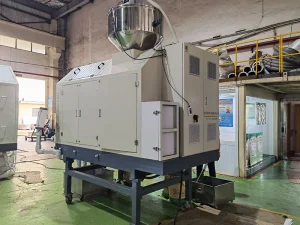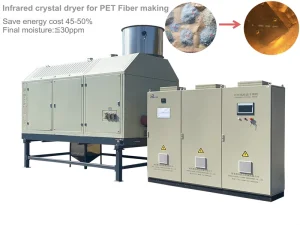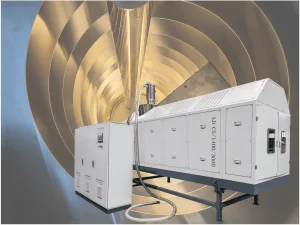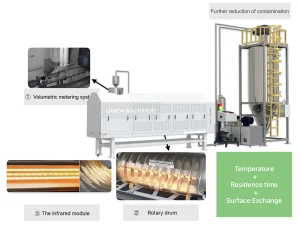
Desiccant dehumidifiers utilize the principle of adsorption to remove moisture from the air. Unlike refrigerant-based systems that rely on cooling air below its dew point, desiccant technology uses a specialized material (the desiccant) to attract and hold water molecules. In industrial manufacturing, specifically for high-performance resins like PET, PETG, and PLA, this process is critical. The air is passed through a rotating wheel coated with desiccant materials, which absorbs humidity. The wheel then rotates into a reactivation zone where heated air releases the moisture, ensuring a continuous, energy-efficient cycle.
LIANDA MACHINERY, established in 1998, represents the pinnacle of Chinese industrial manufacturing. By integrating German-patented drying technology with local high-efficiency production, we offer OEM/ODM services that prioritize stability, performance, and cost-effectiveness. Our supply chain resilience ensures that even in volatile global markets, our partners in 80+ countries receive high-quality machinery with competitive lead times.
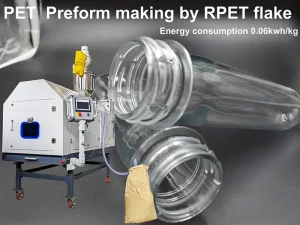
The future of desiccant dehumidification lies in "Smart Drying." We are currently integrating IoT sensors to monitor dew point levels in real-time, allowing for AI-driven adjustments to energy consumption. As the global push for circular economy intensifies, our machinery is leading the charge in processing recycled PET (rPET) with higher purity levels, reducing environmental impact while boosting manufacturer profitability.
Q1: Why choose desiccant technology over traditional heating?
A: Desiccant systems offer precision moisture control down to 50ppm, which is impossible with standard thermal dryers. It is the gold standard for high-quality polymer production.
Q2: How does LIANDA ensure global compliance?
A: Every machine we manufacture is ISO9001 and CE certified, meeting rigorous safety and performance standards for markets in the EU, USA, and beyond.
Q3: Can you handle custom OEM projects?
A: Yes, with 26+ years of experience, our R&D team specializes in tailoring drying and recycling lines to specific regional or material requirements.